Monday, March 18, 2019

LO1: Understand the purpose of audio-visual promos resubmission.

P1- Explain the structure of identifies audio-visual promos for different purposes.
M1- Analyse the different approaches used in the identified promos.
D1- Compare and contrast the messaging within these identified promos.

The first type of audio-visual promo that I am going to look at is film trailers. Film trailers are created in order to promote an upcoming film, to encourage the audience to watch the film. Film trailers usually include the main characters, an outline of part of the plot, and one-liners that are made to encourage the target audience to watch the film.

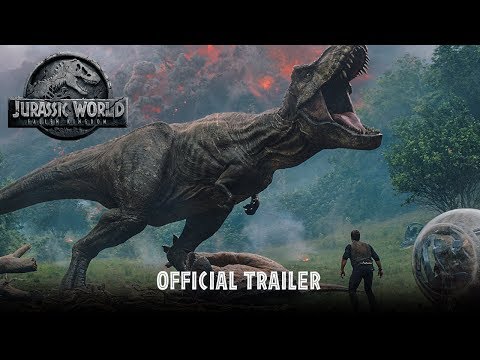
One example of a film trailer is 'Jurassic World: Fallen Kingdom'; a film trailer for an action triller. Some important conventions of trailers including a voiceover that relates to the images on the screen, title screens with the film logo as well as more specific conventions to the genre like dramatic, significant music. The use of the drums beating and then increasing in tempo signifies how the action in this film will be tense as it mimics the heartbeat of the audience whilst they will be watching the film. The use of quickly cut action sequences makes the audience excited about the short snippets they see in the trailer as well as leaving them with questions about the short clips they have seen. These next few shots are particularly well placed for encouraging the audience to come and watch the film. In action genre film, the plot is usually based around the main protagonist and his goals that he is trying to accomplish. Right from the start of the trailer, the main protagonist's goal is easily seen "save the dinosaurs from an island that is about to explode". From the start of the trailer it is clear that in this film the dinosaurs are being represented as an endangered species that needs to be protected.

It can be seen as the dinosaurs are running away from the natural disaster that these animals will die if the protagonists don't help them. The reason for their demise being a natural disaster makes the dinosaurs the victims and therefore we sympathise with them. This changes who we see as to blame to the pain. The audience is forced to ask themselves whether the dinosaurs are the real antagonists of the film.  

The close-up of the protagonist looking incredibly intense out into the distance shows to the audience that firstly, this character is important in the film, and secondly that the film is going to have some intense moments in it.  


The low angle of this shot shows us that the erupting volcano is important and holds all the power. This tells the audience that the volcano is an important element of the film as the low angle makes the audience feel intimidated by its power. 

The use of explosions in the trailer show that the film is an action film. Explosions are a common theme in action films as they represent destruction and danger, common entities in action thrillers. The explosion reminds the audience that the characters are in danger which helps the audience emotionally invest in the characters and the film. 


Another example for a film trailer is 'Christopher Robin' which is a nostalgic adventure comedy. Important features include a a voiceover relating to the snippets of the film shown, similar to the Jurassic World trailer. As well this, it has title scenes (re)introducing the characters and telling the audience when the film is likely to be in cinemas. The trailer uses phrases like "The most beloved characters of all time" to encourage the audience to watch the film as they are reminded of its large fanbase and their childhood. The use of powerful music in a major key emphasises the nostalgic selling point of the film as its positive nature reminds the audience of their happy memorises. The film being a hybrid of two genres creates a unique situation that is found in most adventure comedies, including this one, where characters adventure to somewhere new to them. In this instance the inhabitants of the 100-Acre-Wood travel to London to find Christopher Robin. This creates lots of lighthearted comedy as London is very different from the 100-Acre-Wood and the etiquette is also different. In this film, adult men are represented as boring who have forgotten what it is like to be a child. This can be seen in the change of mannerisms between the dismissive adult Robin, to the Robin who interacts with Winnie-the-Pooh. He acts as if he is once more a child, and the lightheartedness stays with him from the encounter onwards throughout the rest of the film.   The use of the pathetic fallacy of the rain at the start of the trailer sets up the character arc for Christopher Robin. In this genre of film, the adult protagonist usually learns a lesson about how they have forgotten the importance of family or fun. The use of the pathetic fallacy of the miserable London rain sets up the idea that the adult Christopher Robin has forgotten what is really important.

The use of this wide shot of Christopher Robin running off into the distance with a red balloon signifies that he will remember what he had forgotten which gives hope the the audience, it also a signifier to the original cartoon. 

Trailers are different from other audio-visual promos as they are advertising films or television programmes rather than music videos. Trailers are usually a couple minutes long which is the same as a music video, but different to idents. The main difference between a trailer and a music video (apart from the medium of film and television instead of music) is that a song will only have one music video, whereas a film can have multiple different trailers coming out at various stages of the marketing campaign, all for the same film.

Another type of audio-visual promo is a music video. A music video is created in order to promote a new song by the artist. It is important that the genre of the music video is the same genre to the song (or that the genres work together if they are different). One example of a music video is Galway Girl by Ed Sheeran. The song is a folk pop song and the music video is the same. As it is a music video, therefore trying to promote the song, it is a feature of all music videos that all the audio is the song. Sometimes the music video features the artist singing their song. In this video, the artist is only visually singing this song for a few seconds at the beginning. In this film, the whole things is really jolly, and the Irish people that Ed Sheeran meets are mostly all represented as being really fun and lovely people. In the video the couple go to at least two different pubs and are therefore also being represented as being alcohol obsessed.
https://www.youtube.com/watch?v=87gWaABqGYs

Some of the conventions the music video has is the inclusion of the celebrity Saoirse Ronan. Music videos often include famous people as it encourages the audience to watch the video because of the star appeal.
 Another convention of music videos is dancing because dancing is one of the most common things that is done to music. In this video lots of the dancing is Irish dancing or folk dancing to fit with the genre of the music video and song being folk.

In order to fit with the genre of the song and music video, the music video was filmed in Ireland in lots of places that fit with both the genre and the theme of the song. The song is about meeting a girl and all the things they did and places they went that created their "perfect night". Places they filmed in to fit the theme included pubs and bars, as well as the streets of Galway. 
They also included places included in the song. For example when he sings "she beat me at darts.." the people in the video are playing darts. 


 Another example of a music video is the song 'Take On Me' by A-HA. 


This genre of this music video is pop. The music video echoes the song through; mimicking its upbeat nature, being artistic like the song, and being dramatic. All the way through the music video, what is being said is reflected by what is happening on screen. Throughout the music video, the genre of 'pop' is presented through the artistic style of the combination of animation and real life shots. The genre can also be shown through the instruments shown during the instrumental. In the music video, comic books are not represented as being uncool or nerdy as they usually are, the characters are interesting and the protagonist is wearing a leather jacket which is usually associated with cool people. As well as this it is the women who is reading the comic book, usually is is always boys who are the people who are shown reading comics. 

During this bit of the music video, when the hand comes out of the comic book, the lyrics are saying "Take me on" this is representing the man offering the women a chance to come with him. When he says "take me on" he is asking for her to give him a chance. 


When he sends her to safety he is says "I'll be coming for you anyway" which shows that he is going to follow her, and not leave her. 

Here he is saying "take on me" which suggests that he will get into a fight with these guys. This is mimicked by the menacing looking racers who are threatening them with tools. 

Here the internal conflict of the character thrashing around on the walls is represented in the words "Take on me" in English innocently meaning 'give me a chance' and the meaning in the artist's mother tongue of Norwegian where it translates to "touch me". The conflict of the two different translations and meanings is being reflected in the internal conflict of the cartoon man becoming real.   
                   
The main differences between a music video and other types of audio-visual promos are that the music video's audio track will always be the audio of the song that the audio-visual product is advertising. Music videos can come in various different shapes and styles and isn't constricted to any one style other than to have the song as the audio-track. This is what makes it different from trailer and an ident as they both have to stay within the constrictions of that particular type, for example, trailers must have title cards, or idents must introduce the show that it preludes. 

The third type of audio-visual promo is an ident. Idents are used to introduce what program is up next on a particular channel. Idents are usually a few seconds long and are related to the program created in some way. For example the BBC2 idents all have a similar theme of being about the animated robot '2'. Sometimes the ident is related to the show. This can be exemplified when the '2' is putting up Christmas decorations when the program is for a Christmas special. Most idents have a voiceover explaining what show is coming up next. The narrator is usually amusing and pleasing to listen to. If I was forced to say what genre these idents are, I would say a comedy. They include comedic conventions such as amusing narration and the object of the ident (the robotic '2') is often put into comedic situations such as being bounced like a ball. This kind of stupidity can be seen as amusing and therefore comedic genre. In this ident, robots are being represented as curious and harmless, this could be seen as controversial as there is a lot of fear about artificial intelligence becoming superior to their creators.

Another example of an ident is the channel 4 idents. These idents also all have a voiceover explaining what shows are coming up next. However they also have other features in common, this creates a universal theme making any channel 4 ident recognisable. These common features includes a moving camera and random objects aligning to create a large '4'. Channel 4 shows lots of drama shows, to echo this, the idents are also from the drama genre. However specific ident echoes whatever show the narrator is talking about. For example, when 'Star Trek Enterprise' was the next show, the ident was alien themed.

Throughout all the audio-visual promos, the main idea is to promote the product. This is done in different ways depending on the different product, however the motive remains the same. Throughout the audio-visual promos that I have analysed, it is clear that the genre is the same as whatever the product it is promoting. The music videos and the film trailers are a short time of 2-3 minutes each, however the idents are only a few seconds long each. Despite the different lengths in time, the same purpose of promotion is created.

LO3: Be able to produce production materials for an original audio-visual promo idea resubmission.

P4: Create the production materials in line with the plan.

Here is some photo evidence of the filming of 'The Boggart' trailer. These photos show me being the cinematographer and using the camera to film the footage that we needed.


Some of the rushes I filmed include:


I then sorted the footage into the different days of footage and into useable and unusable.

Before filming, we did a location recce and a risk assessment in order to make sure that everyone was kept safe and that we filmed in the best possible locations. These were the possible locations for the filming of 'The Boggart! Trailer', it was useful for us during the production of 'The Boggart! Trailer' as it had a list of all the pros and cons for each location meaning that it was easy to decide which location would be good for filming different scenes and when. 


As well as this, we made sure that we were not under any infringement of copyright by using all our own work and having the writers sign to say that we were allowed to use their face and voice in our audio-visual promo. As well as this, the music I used was from a youtube channel that specified that as long as I credited the artist then I would be allowed to use their work, which I did. 

D2: Justify the creation process against the original concept documentation

During the production of my audio visual promo, my concept documents were very useful. For example, the mood board was very useful in helping me to keep the genres and themes that I wanted to use. It reminded me that I want the colour theme to be dreary and plain so I made sure that the fonts I used in the title screens and that the colours I used were plain, but contrasting; black and white.  The mood board also helped me to keep the themes that I wanted in it reminding audiences of the 1958 film "The Blob". I kept these themes through using large title screens to describe what is going on, and through the ominous screams. In "The Blob" trailer, screaming can be heard as people are running away from the monster; in my trailer, screaming can be heard whenever an 'ominous' tree is on the screen. This creates an enigma code in the audience's mind, as they will associate that tree in the film with screaming when they watch the film, and they will know that something bad is going to happen. However, the mystery is introduced as the audience do not know what caused the screaming. On my mood board, I used a particular font that I wanted for the final title of the the audio-visual promo with the word "The Boggart", however I was unable to use the same font that I wanted in Final-Cut Pro as the software did not feature this particular font, which resulted in me having to change my idea for this. The font that I went with in the end worked as well as the one that I planned to use, but I still prefer the planned font.

Another concept document that was useful in the creation of my audio visual promo was the mind map. It helped during editing decisions like deciding what editing style i was going to use. I decided to use lots of quick cuts and to make the cuts to the music which helped show the dramatic themes that I was wanting to show to the audience. My mind map also reminded me, that in wanting to show through my audio-visual promo the urban genre, I should use urban music, as it is easy to recognise. The mind map also helped me in the filming of the footage, specifically the choosing of locations and exactly where we wanted to film and the best place to position the camera as the mind map specifically mentions that the audio-visual promo should take place in the park and on streets. The mind map was also important for during the production of filming as it reminded me that I wanted to use low angle shots in order to create mystery. 

The storyboards were quite useful in the creation of my audio-visual promo, as they were a detailed plan that helped me create the first minute of my audio-visual promo, this meant that as long as I stuck to the plan I would be able to create the affect I desired in my audio-visual promo. However, I discovered very quickly that the amount of storyboards I had created was not enough to last the required time suggested in the brief. This resulted in myself not following any storyboards for the second half of creating my audio-visual promo which made the editing process of my audio-visual promo much more difficult as I had to find more footage. This included, at times, using some footage that was blooper footage and not meant to be used in the actual audio-visual promo, but once I removed the audio from that piece of footage, it worked well within the audio-visual promo.  

LO4: Be able to finalise production materials for an original audio-visual promo idea resubmission.

P5- Produce an offline edit of the promo.


This is an offline edit of my trailer, meaning it is only the basic footage without any real editing being done to it.

P6- Carry out post-production processes to edit the audio-visual material to produce the final product.


M3- Justify the visual and audio effects used within the promo.

Within the promo, I have included several visual and audio effects. One of the audio effects I did was to add a sound track. My soundtrack, created by Fesliyan Studio, is a piece of music called 'Darkness Arrives'. It is very suspenseful and eerie, this creepy affect was created through the intensity being increased as the pace of the loud drum beat quickens. As well as this, the unplaceable synthesised sounds creates tension as the audience do not know what they are hearing. Also, the length of the piece of music is the perfect length for a trailer; one minute twenty seconds.

Another sound effect I used in my audio visual promo is the use of a scream. The scream was a recording of the actress Kadiza Begum, however, the audio of the scream was elongated in order for it to sound unnatural. As well as this, the scream was played twice, both in areas of silence to emphasise the scream and it being unnatural.

In the promo, there are many fade transitions, these make the beginning shots flow easily from one to another and the fluidity of the beginning shots emphasises the harsh cuts later on in the promo. In the promo I also have title screens. These title screens tell important pieces of information such as a basic plot so that the audience knows what is going on, as well as what actors will star in the film and where the audience can go to watch the film.

Other editing techniques I used includes slowing portions of the footage down. I did this to increase the intensity of the movements of the actors in that shot. By elongating the time it takes for an actor to complete their intended movement, I can emphasise specific parts of the movement to make the audience pay attention to it more.

Also within the promo, I reversed some of the footage. I did this in order to change how the audience related to the promo. The opening shot of the promo is the camera zooming in to a close up the Olympic Park, by zooming in at this point of the promo, it is like the audience are being sucked into watching it. Originally, the footage was zooming out to a wide shot of the Olympic Park and not engaging the audience in the same way.

In the promo, many of the cuts are to the music. This makes each cut stand out as not only can the audience see the cut, but they can hear it too. This also means that as the music speeds up, so does the rate of the cuts, therefore creating more of a tension build up. Throughout editing, the majority of the editing decisions I have made were to increase the tension and build suspense in the promo. I did this as it will increase the audience's want to watch the film that this promo is advertising. It also solidifies the genre of the film as an urban-drama.


M3: Focus groups.

A focus group is a good method in order to gain feedback for an audio visual promo as you can gain honest feedback from a large group of people at the same time. Focus groups are better than one on one interviews as it would save time as you are gaining all the feedback at the same time, as well as this, you would know that the feedback attained is more reliable, as other people will solidify or disclaim what is being said by one person. Focus groups are better than a survey as you can ask follow up questions if you want more specific feedback from any piece of criticism, whereas in a survey you can only gain feedback on the available questions on the survey.

All the feedback that I gained for my audio-visual promo are small improvements that would not take long to amend, equally; the feedback that I gained are about different titles that ultimately have no real consequence over the rest of my audio-visual promo. One piece of feedback that I received was about the title card at the end of my audio-visual promo that credited the artist who made the music. The feedback I received was that the graphics were not of the same degree as the ones in the rest of the audio-visual promo. This feedback would be very feasible to complete as it would only include changing a font size. In the future I will us this feedback to remember to use the same font size the whole way through.

Another piece of feedback that I received for the audio-visual promo was that I had the title of the film that the audio-visual product is advertising in the audio-visual promo twice. This piece of feedback I found to be useless as I disagreed with what they were saying about the two titles. One of the titles saying 'THE BOGGART!' was not as a way of introducing the film, but as part of the sentence; "IN EAST LONDON THREE STUDENTS RISK THIER LIVES TO FIND THE BOGGART!".

Overall I do not think that these changes will have a large effect on how the audio-visual promo advertises the film it was created to promote, therefore I will make no changes to my overall audio-visual product.


Monday, March 4, 2019

LO2: Be able to generate ideas for an original audio-visual promo resubmission.

P2- Create concept documentation or designs.

Mood Board:

Mind Map:

The audio-visual promo, must be suitable for the target audience of the film that the audio-visual promo is promoting, therefore it must have an age rating of at least a 15. According the BBFC Guidelines, the audio-visual promo may show danger or threat depending on how 'real' it is portrayed as and whether the the dangerous acts should be copied. The work should not endorse discriminatory language and violence may be shown as long as the pain in not dwelt on. Therefore, I see no reason why the planned audio-visual promo should be any more than a 15 rated film as there is no planned violent shots, or shots containing dangerous behaviour or foul language. Based on this, I would suggest that it is more likely that the audio-visual promo would be rated a 12 for it's content, but not purposefully before and children's shows or films as although it would be age appropriate for them, I do not think that it would be morally appropriate for the audio-visual promo to be shown to people who would be unable to watch it. Therefore, I think that the target audience for the audio-visual promo should be 14+. Although it does not seam obvious at first glance, all audio-visual promos have a narrative and tell a story. The narrative for 'The Boggart' trailer is all about enigma codes, creating questions in the audience as a way developing meaning. The narrative of 'The Boggart' trailer is about "three students who risk their lives to find the Boggart". The narrative builds suspense through the cliffhanger ending, and it also creates enigmas about what is happening through questions like "what is a boggart?" and "why are the three teenager so desperate to find this mythical creature?". Narrative is created through the theory of Roland Barthes, that meaning is created through questions that the audience are forced to ask themselves as a result of consuming that media product.

Storyboard:


P3- Produce pre-prodution materials

Gantt Chart:

Call Sheet:


 Risk Assessment:


Location Recce:
Actor Permission Forms:


M2- Discuss the issues and risks involved producing the planned promo

When creating an audio-visual promo, it is important to think about the legal, ethical and moral considerations of the audio-visual promo. Firstly, copyright is very important for two reasons; one being that you don't illegally use someone else's work, and another being that you want to make sure that the work that you are creating is not to be used illegally by other people. Copyright laws are particularly thought about during the sound editing as it is common for the music to be outsourced elsewhere. The outsourced music must be either copyright free, or have the permission of the artist. In either instance, it is important that the artist is credited for the use of their music.

It is also important when planning an audio-visual promo, that the actors all give their permission to be in the audio-visual promo. This is to ensure that there are no legal issues and that the actor is willing to be in the audio-visual promo, this is to cover the production company as well as to protect the actor. There are two types of forms for this; one for under 16s, where a parent or guardian signs for the actor, and one for over 16s, where the actor can sign for themselves.

Another important thing to think about is the age rating and who is to regulate the audio-visual promo. I would say that the audio-visual promo would be regulated by both the British Board of Film Classification (BBFC) and the Advertising Standards Authority (ASA) as the audio-visual promo is both an advert for a film (a trailer) and, in a way, a short film in its own right. The role of these regulatory bodies is to protect the audience from any unsavoury content. Particularly vulnerable audiences such as children. If the audio-visual promo was deemed unsuitable for a certain group of people, eg: children, then it would affect the distribution and scheduling of the product. For example, the distribution would be affected in cinemas, as the audio-visual promo could only be shown in screenings for films of compatible ratings. An example of how the scheduling would be affected would be that audio-visual promos that are not suitable for children legally have to only be shown after a certain time of night. Ethically, it is important that the guidelines from the regulatory bodies are upheld so that it can be guaranteed that no potentially vulnerable audience member is harmed by consuming the product who shouldn't have been able to consume it. It is the producer's job to make sure that the audio-visual promo is being screened is a moral and ethical way. This could be through not showing the audio-visual promo on certain channels. It is also important that the rating of the product that the audio-visual product is advertising be taken into consideration when choosing where the audio-visual promo will be screened. It would be unethical to show the trailer for a 15 rated film on a children's channel; even if the audio-visual promo was age appropriate in the eyes of the regulatory body, the product that is being advertised would not be appropriate for these viewers and therefore it would be unethical for the audio-visual promo to be advertised to them.

It is the producer's job to survey these things and make sure that the audio-visual promo is screened in an ethical, moral and legal manner.

LO1: Understand the purpose of audio-visual promos resubmission.

P1- Explain the structure of identifies audio-visual promos for different purposes. M1- Analyse the different approaches used in the identi...