M1- Analyse the different approaches used in the identified promos.
D1- Compare and contrast the messaging within these identified promos.
The first type of audio-visual promo that I am going to look at is film trailers. Film trailers are created in order to promote an upcoming film, to encourage the audience to watch the film. Film trailers usually include the main characters, an outline of part of the plot, and one-liners that are made to encourage the target audience to watch the film.
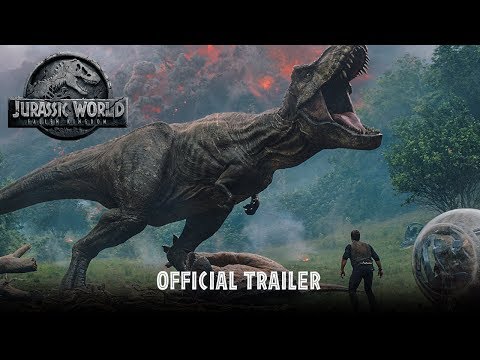
 It can be seen as the dinosaurs are running away from the natural disaster that these animals will die if the protagonists don't help them. The reason for their demise being a natural disaster makes the dinosaurs the victims and therefore we sympathise with them. This changes who we see as to blame to the pain. The audience is forced to ask themselves whether the dinosaurs are the real antagonists of the film.
 The close-up of the protagonist looking incredibly intense out into the distance shows to the audience that firstly, this character is important in the film, and secondly that the film is going to have some intense moments in it.
 The low angle of this shot shows us that the erupting volcano is important and holds all the power. This tells the audience that the volcano is an important element of the film as the low angle makes the audience feel intimidated by its power.
 The use of explosions in the trailer show that the film is an action film. Explosions are a common theme in action films as they represent destruction and danger, common entities in action thrillers. The explosion reminds the audience that the characters are in danger which helps the audience emotionally invest in the characters and the film.
 The use of the pathetic fallacy of the rain at the start of the trailer sets up the character arc for Christopher Robin. In this genre of film, the adult protagonist usually learns a lesson about how they have forgotten the importance of family or fun. The use of the pathetic fallacy of the miserable London rain sets up the idea that the adult Christopher Robin has forgotten what is really important.

 The use of this wide shot of Christopher Robin running off into the distance with a red balloon signifies that he will remember what he had forgotten which gives hope the the audience, it also a signifier to the original cartoon.
Trailers are different from other audio-visual promos as they are advertising films or television programmes rather than music videos. Trailers are usually a couple minutes long which is the same as a music video, but different to idents. The main difference between a trailer and a music video (apart from the medium of film and television instead of music) is that a song will only have one music video, whereas a film can have multiple different trailers coming out at various stages of the marketing campaign, all for the same film.
Another type of audio-visual promo is a music video. A music video is created in order to promote a new song by the artist. It is important that the genre of the music video is the same genre to the song (or that the genres work together if they are different). One example of a music video is Galway Girl by Ed Sheeran. The song is a folk pop song and the music video is the same. As it is a music video, therefore trying to promote the song, it is a feature of all music videos that all the audio is the song. Sometimes the music video features the artist singing their song. In this video, the artist is only visually singing this song for a few seconds at the beginning. In this film, the whole things is really jolly, and the Irish people that Ed Sheeran meets are mostly all represented as being really fun and lovely people. In the video the couple go to at least two different pubs and are therefore also being represented as being alcohol obsessed.
https://www.youtube.com/watch?v=87gWaABqGYs
 Some of the conventions the music video has is the inclusion of the celebrity Saoirse Ronan. Music videos often include famous people as it encourages the audience to watch the video because of the star appeal.

 Another convention of music videos is dancing because dancing is one of the most common things that is done to music. In this video lots of the dancing is Irish dancing or folk dancing to fit with the genre of the music video and song being folk.
 In order to fit with the genre of the song and music video, the music video was filmed in Ireland in lots of places that fit with both the genre and the theme of the song. The song is about meeting a girl and all the things they did and places they went that created their "perfect night". Places they filmed in to fit the theme included pubs and bars, as well as the streets of Galway.
 They also included places included in the song. For example when he sings "she beat me at darts.." the people in the video are playing darts.
Another example of a music video is the song 'Take On Me' by A-HA.
This genre of this music video is pop. The music video echoes the song through; mimicking its upbeat nature, being artistic like the song, and being dramatic. All the way through the music video, what is being said is reflected by what is happening on screen. Throughout the music video, the genre of 'pop' is presented through the artistic style of the combination of animation and real life shots. The genre can also be shown through the instruments shown during the instrumental. In the music video, comic books are not represented as being uncool or nerdy as they usually are, the characters are interesting and the protagonist is wearing a leather jacket which is usually associated with cool people. As well as this it is the women who is reading the comic book, usually is is always boys who are the people who are shown reading comics.
 During this bit of the music video, when the hand comes out of the comic book, the lyrics are saying "Take me on" this is representing the man offering the women a chance to come with him. When he says "take me on" he is asking for her to give him a chance.
 When he sends her to safety he is says "I'll be coming for you anyway" which shows that he is going to follow her, and not leave her.
 Here he is saying "take on me" which suggests that he will get into a fight with these guys. This is mimicked by the menacing looking racers who are threatening them with tools.
 Here the internal conflict of the character thrashing around on the walls is represented in the words "Take on me" in English innocently meaning 'give me a chance' and the meaning in the artist's mother tongue of Norwegian where it translates to "touch me". The conflict of the two different translations and meanings is being reflected in the internal conflict of the cartoon man becoming real.
The main differences between a music video and other types of audio-visual promos are that the music video's audio track will always be the audio of the song that the audio-visual product is advertising. Music videos can come in various different shapes and styles and isn't constricted to any one style other than to have the song as the audio-track. This is what makes it different from trailer and an ident as they both have to stay within the constrictions of that particular type, for example, trailers must have title cards, or idents must introduce the show that it preludes.
Throughout all the audio-visual promos, the main idea is to promote the product. This is done in different ways depending on the different product, however the motive remains the same. Throughout the audio-visual promos that I have analysed, it is clear that the genre is the same as whatever the product it is promoting. The music videos and the film trailers are a short time of 2-3 minutes each, however the idents are only a few seconds long each. Despite the different lengths in time, the same purpose of promotion is created.